What Connects Conventional Wisdom Processors, AI and The Second Trump Administration’s Constitutional Crisis? Part Three
This is a premium piece of Notes on the Crises. Subscribe here to read the full piece- and series. Find part one here and part two here.
Dear readers. I was interrupted by sickness last winter from finishing this series. However, it's only become more relevant in the intervening months so I thought it was important to finish and publish the “payoff” final piece in the series.
What is the vision of the second Trump administration? It's a difficult question to answer. Superficially, it may even seem like a fool’s errand to ask the question. But I do think there is a method that lies behind the madness. At the core of that method is the specific way of understanding what markets are (and how they work) that we’ve been developing so far in this series. And the current core of that intellectual framework is AI—a term which has come to be used as a synonym for Large Language Models (LLMs)— which has rapidly become such a ubiquitous part of our society, so quickly. A set of newly charged information processing markets are also key to our new order. Thus, everything we analyzed in the past two parts finally gives us the intellectual tools to “see the vision” guiding the second Trump administration.
Where should I begin? It's hard to know. However, an obvious starting point is the striking infiltration of prediction markets into everyday life. When you turn on CNN, their resident polling expert Henry Enten flaps his hands around looking through the latest polling. But he also does something else. He runs viewers through what political betting markets are saying about elections. The odds that market participants put on outcomes are treated as just as reliable, maybe even more reliable, than polling. This is remarkable for all sorts of reasons, not least of which is that political betting markets only became legal in the United States in 2024, right on the eve of the 2024 presidential election. According to the DC Federal Court of Appeals, derivative “event contracts” that “allow persons within the United States to place money on the outcome of the November 2024 congressional elections” do not “involving either gaming or gambling”.It's worth pausing here to fully soak in the court’s reasoning that these “event contracts” are not “gaming” or “gambling”:
The court reasoned that, within the meaning of the Special Rule, “gaming” must refer to the “act of playing a game” or “playing games for stakes.” Id. at *8, 10. Because elections are not games, the court concluded that the category does not apply to election contracts. Id. at *8–10. The district court also ruled that the term “involve” refers to the “event being offered and traded” under a contract, not the contract itself. Id. at *13. Thus, because the underlying events in the Congressional Control Contracts—“elections, politics, Congress, and party control”—are not themselves unlawful under state law, the contracts did not “involve” “illegal or unlawful activity.”
In other words: because congressional elections are not illegal, neither are derivative “event contracts” which allow people to take bets financial positions on the outcomes of congressional elections. In other words the court, in essence, said that horse racing isn’t illegal so buying and selling “event contracts” on the results of a horse race isn’t illegal either.
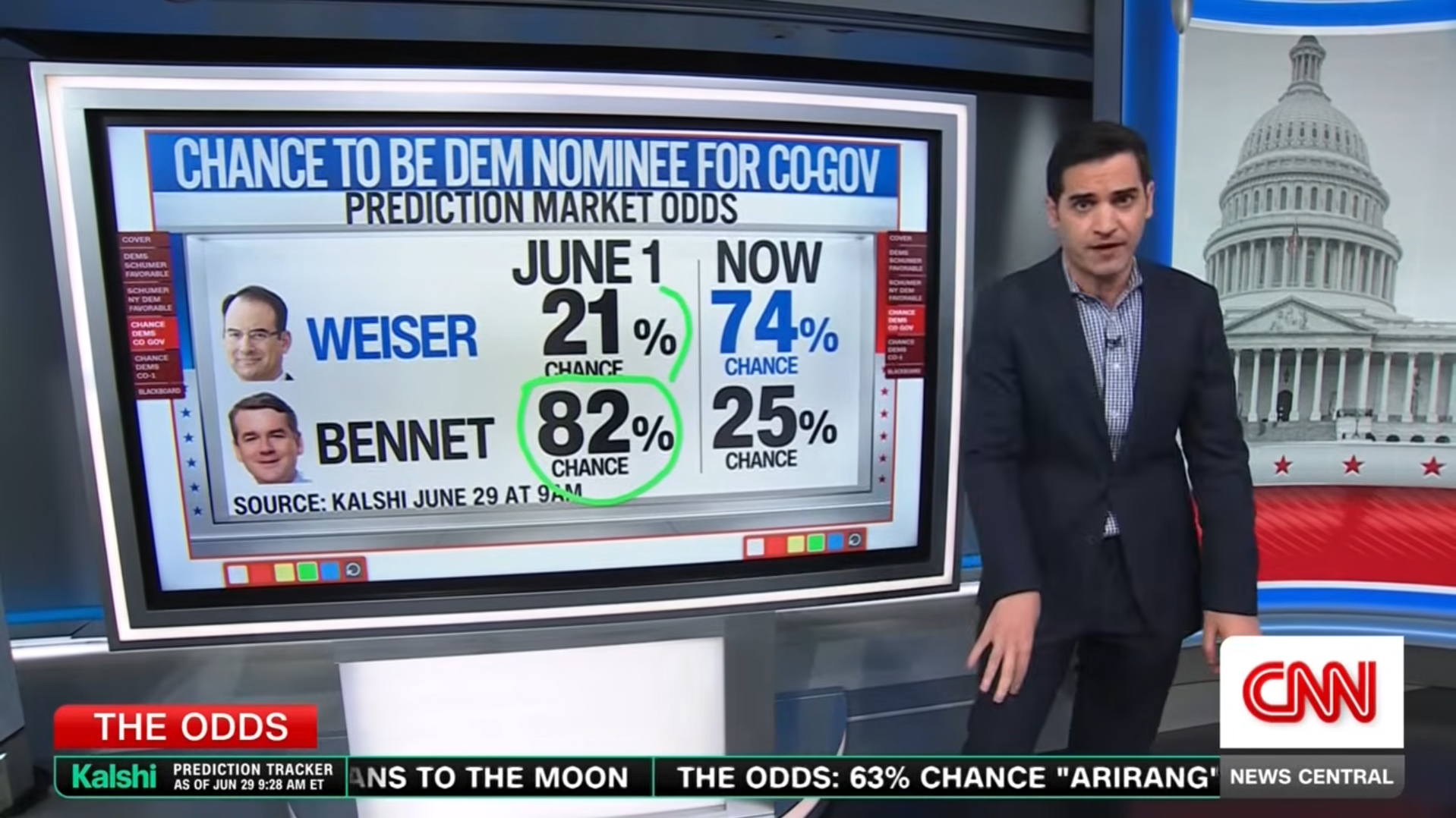
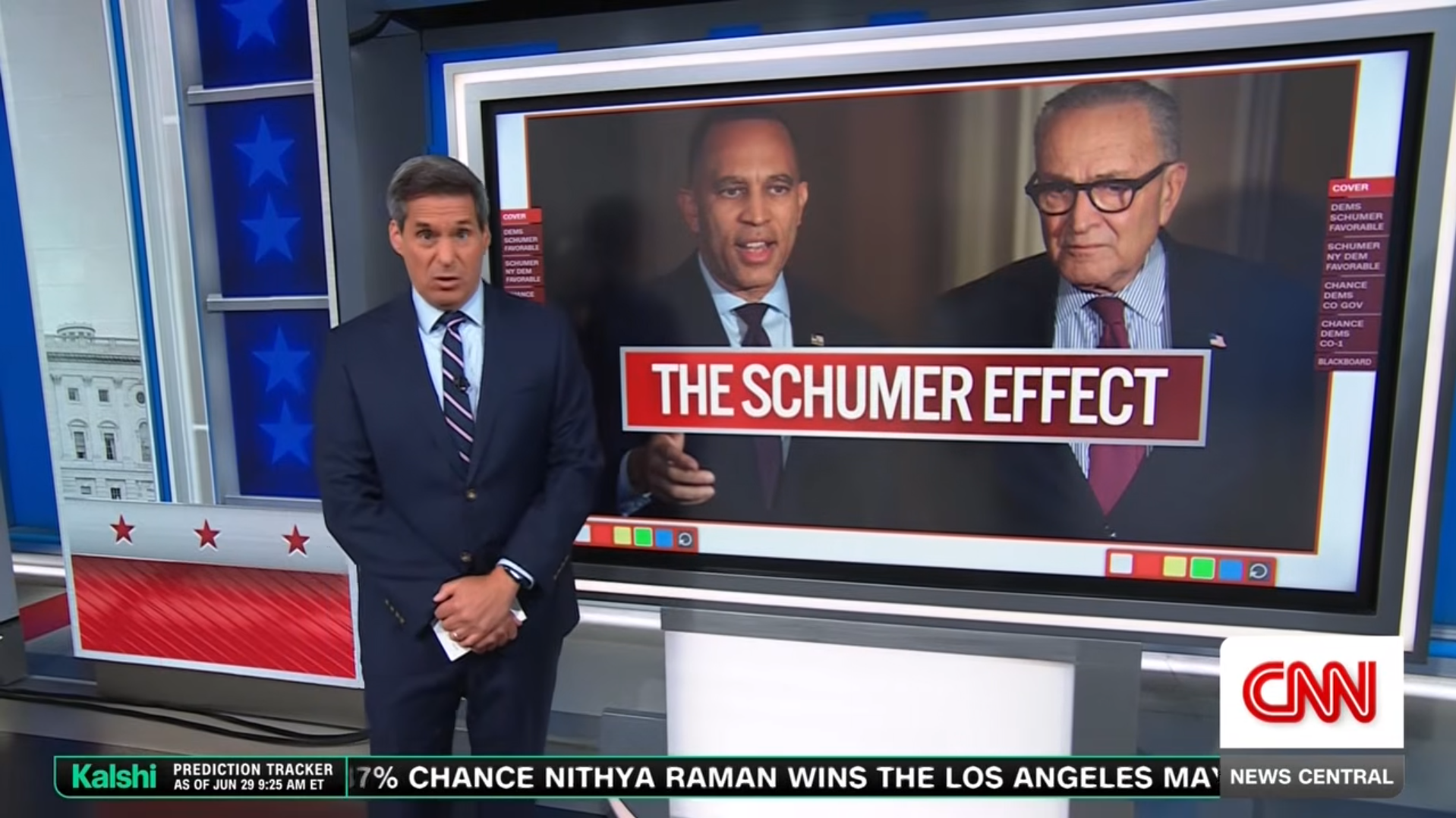
The infiltration of Kalshi into CNN’s ostensibly news coverage has gone further lately. Now it's not simply running through the betting market odds for the specific topic Henry Enten is talking about. Now these segments are paired with “Kalshi Prediction Tracker” tickers, like the on-screen stock tickers of CNBC or Bloomberg. These provide “up to date” betting odds for a variety of political races, beyond the scope of the specific segment. Both aspects are notable: first the rising importance of these betting markets and the willingness of CNN (and CNBC) to partner with a specific company, and promote them despite that only recently being legalized in the United States. When I first planned this series, I intended to talk about prediction markets at length. I’ve waited so long that Kalshi had time to ink these deals, and thoroughly embed themselves into news coverage.
It is not simply the rise of political betting markets that is notable. It is also the rise of sports betting. A crucially important Supreme Court decision in 2018 that fell under the political radar was Murphy v. National Collegiate Athletic Association which overturned the Professional and Amateur Sports Protection Act (PASPA). This act banned sports betting except for a handful of states with existing institutions. Most obvious in these exclusions is Las Vegas. States quickly started taking advantage of the decision to legalize online sports betting, with the biggest wave of states coming in 2021. They were motivated by changing mores around gambling and a desire for “easy” revenue in the context of the Coronavirus depression. This is not too dissimilar from the shift to legalizing state lotteries over the 1960s and 1970s. Previously I wrote about the history of the Lottery in the United States, going back to the founding era a decade ago at Jstor Daily.
The wave of legalized sports gambling has been transformative for our society. Coinciding with Covid, it captured the attention of many millions of people who were bored and stuck at home. You see these companies advertised everywhere, and they clearly have intensified people’s already intense passion and focus on sports. The dark side of that passion is also clear with increasing threats to sports players, both online and in person. Some statistical studies estimate, for example, that an unexpected NFL home team loss raises “intimate partner violence”, relative to states where sports betting is still illegal, by 10%. Generally, total gambling losses (using a narrow definition of gambling) have been accelerating—now adding up to well over 200 billion dollars a year.
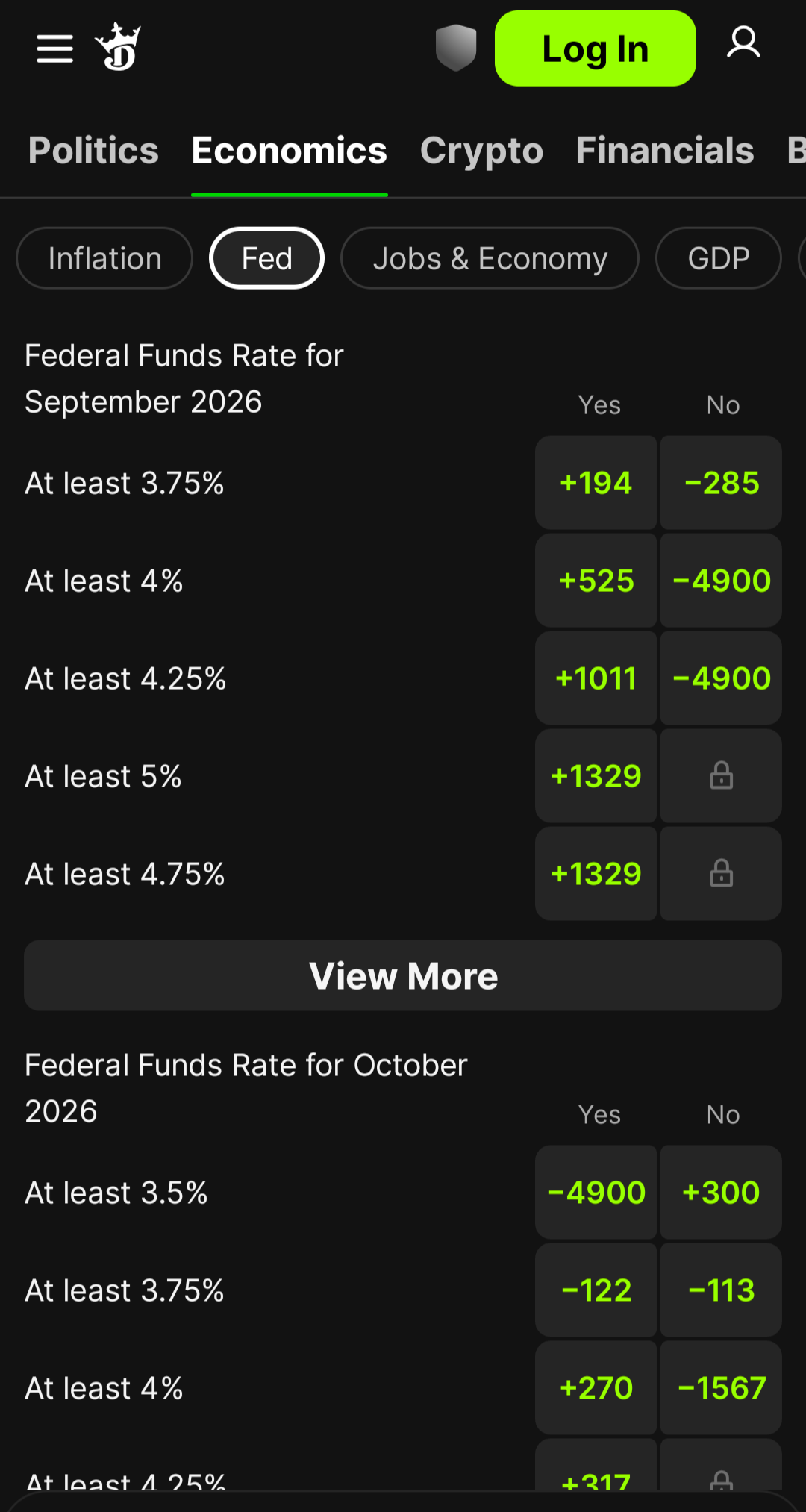
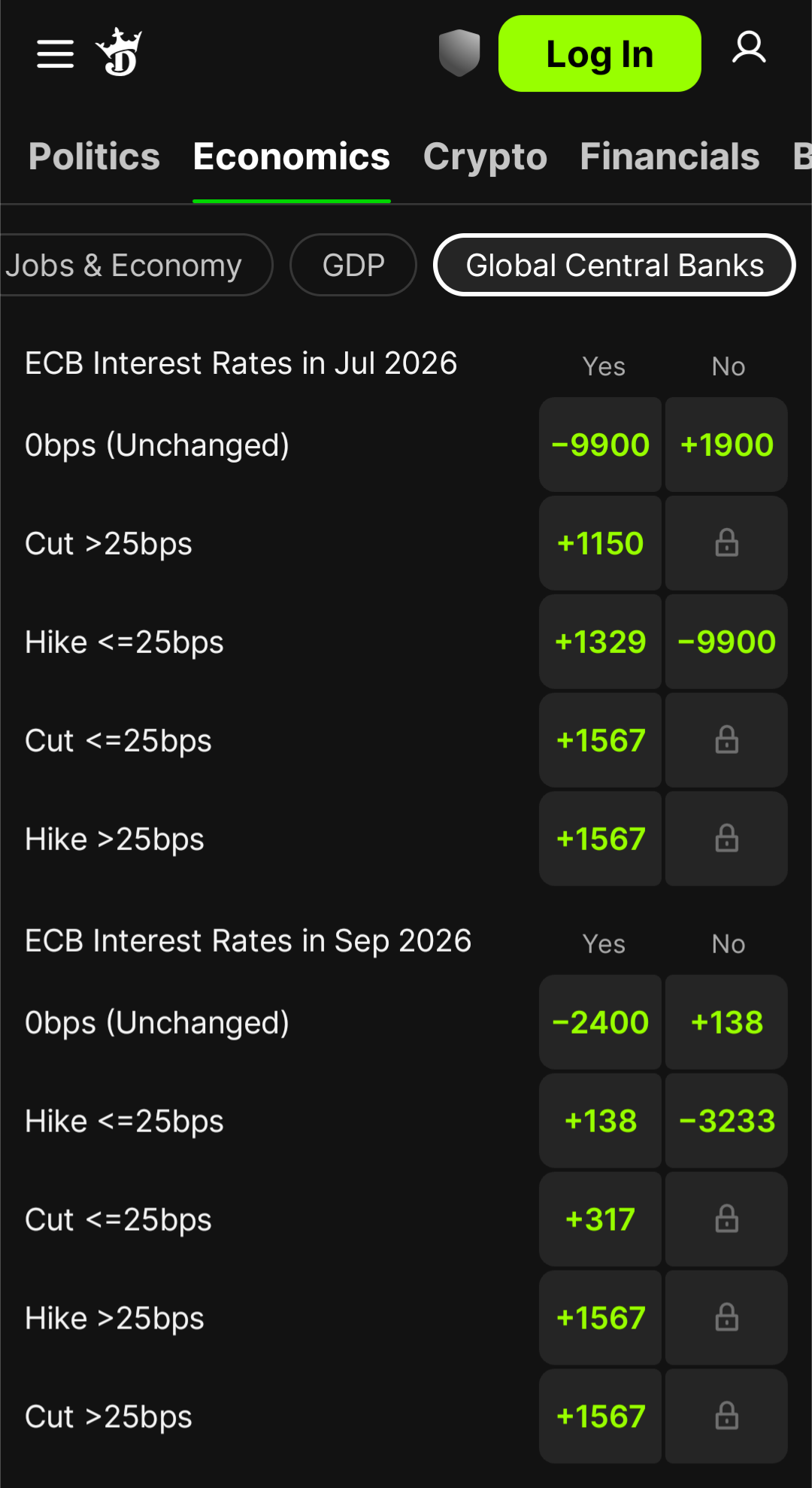
This may seem like an irrelevant aside, but it's not. Sports betting and prediction markets have been increasingly blurred in recent years. You can use prediction market exchanges for sports betting; after all, you are predicting a future event aren’t you? More notable is that you can also enter prediction markets using your sports betting app. Draftkings, for example, launched their own prediction market exchange “DKeX”. When you open the DraftKings mobile app, you have the option to bet on politics, and even the Federal Open Market Committee’s next policy decision. What’s the difference between sports betting companies and prediction market companies? Increasingly, it is merely the proportion of their business which is still dedicated to their “core” business. Even this may not be particularly true since it's estimated that the majority, or even vast majority, of prediction markets “volume” is sports betting.
While there has been serious policy concern about these developments, the intellectual and ideological implications of these radical changes to our society have gone undercommented on and underdiscussed. What happens when we trace the ideological and social changes behind the rise of sports betting and prediction markets up through the role of stock and commodity markets under Trump’s second term, and ultimately to Large Language Models, the AI Boom and the increasing use of AI within the federal government? what we find is a sophisticated and well developed worldview which is having ever greater influence.
Sign up for Notes on the Crises
Currently: Comprehensive coverage of the Trump-Musk Payments Crisis of 2025